
The Importance of Dewpoint Measurement
Compressed air is a vital utility in many industries, powering tools, automation systems, and processes. However, moisture in compressed air can cause significant problems, including equipment damage, product spoilage, and increased maintenance costs. Dewpoint measurement is essential for ensuring air quality and protecting downstream equipment.
What Are Compressed Air Dryers?
Compressed air dryers are devices designed to remove water vapor from compressed air. When air is compressed, its ability to hold moisture decreases, causing condensation. If not properly managed, this moisture can lead to corrosion, blockages, and system failures.
Different Types of Compressed Air Dryers
There are several main types of compressed air dryers, each with unique advantages and applications:
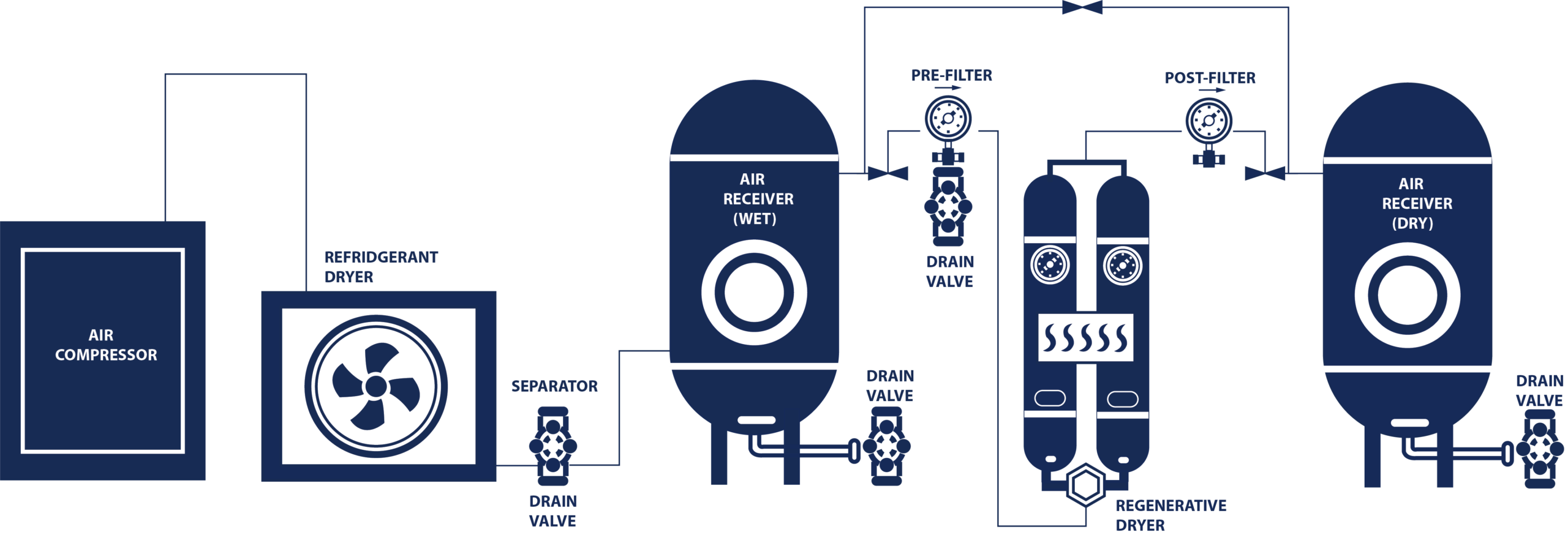
- Refrigerated Dryers: Cool the air to condense and remove moisture. Suitable for general-purpose applications where a dewpoint of around +3°C to +10°C (37°F to 50°F) is sufficient.
- Desiccant (Adsorption) Dryers: Use materials like silica gel or activated alumina to adsorb moisture, achieving much lower dewpoints (as low as -40°C to -70°C (-40°F to -94°F)). Ideal for critical applications that require extremely dry air.
- Membrane Dryers: Use selective permeation through a membrane to remove water vapor. Best for point-of-use drying and small flow rates.
- Deliquescent Dryers: Use chemicals that absorb moisture and dissolve. Simple and low-maintenance, but with limited dewpoint control.
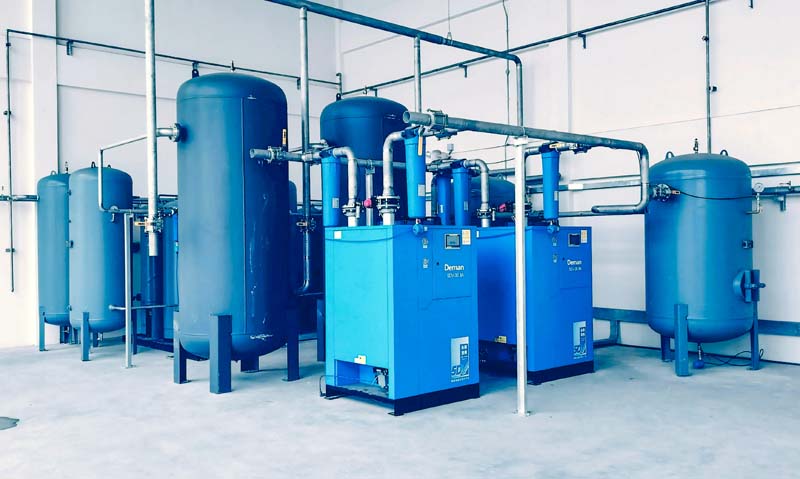
Typical Compressed Air Drying System
Moisture Problems in Compressed Air Systems
Excess moisture in compressed air can cause:
- Corrosion of pipes, valves, and tools
- Freezing in outdoor lines during cold weather
- Product contamination in food, pharmaceutical, and electronics industries
- Reduced efficiency and increased maintenance costs
The Role of Dewpoint Measurement
Dewpoint is the temperature at which air becomes saturated with moisture and water begins to condense. Continuous dewpoint monitoring allows operators to:
- Verify dryer performance
- Detect dryer malfunctions early
- Ensure compliance with industry standards
(e.g., ISO 8573-1 for compressed air quality) - Optimize maintenance schedules and reduce downtime
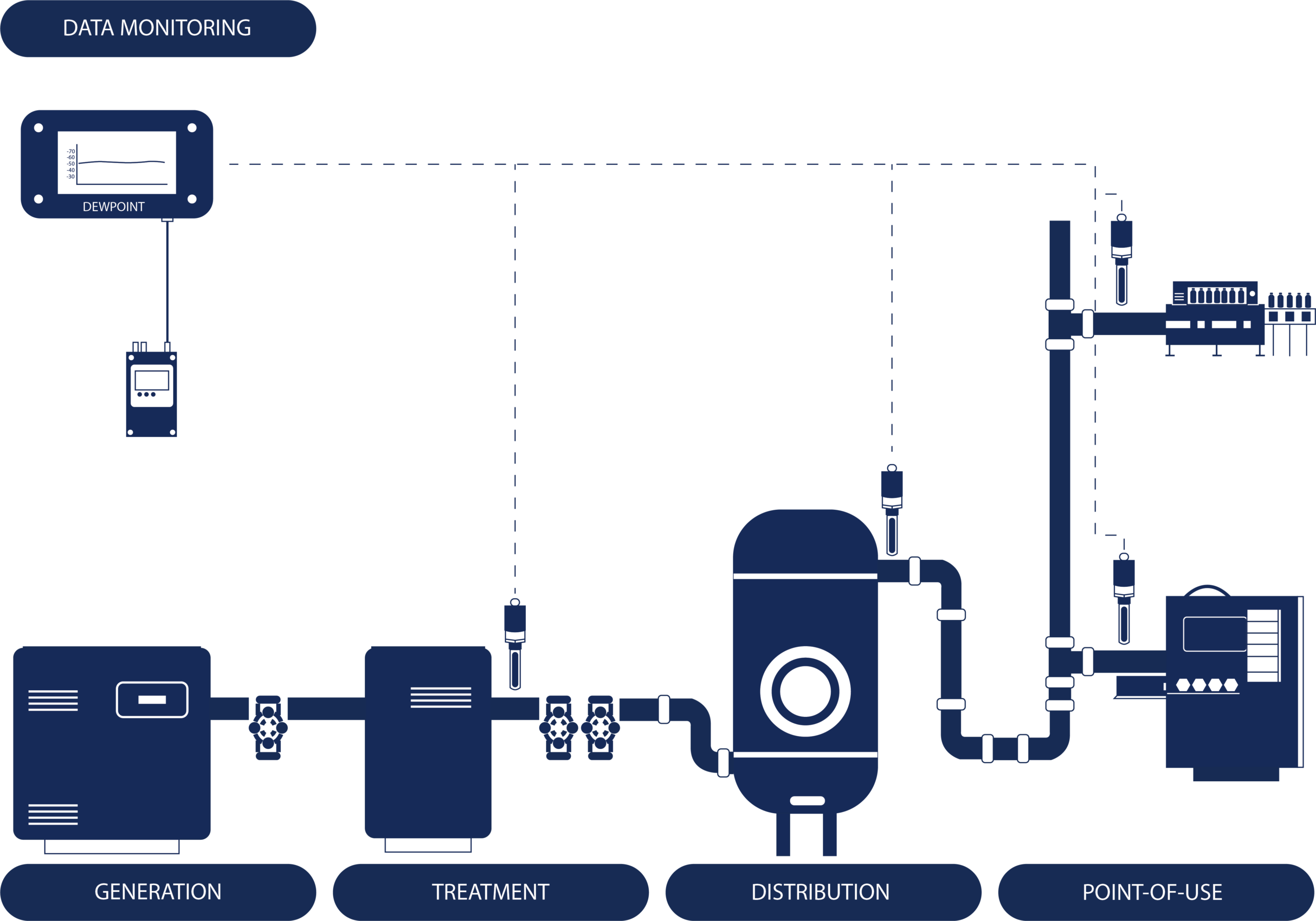
Solutions for Dewpoint Measurement in Compressed Air Systems
- Install dewpoint sensors downstream of compressed air dryers for real-time monitoring.
- Use portable or handheld instruments for spot check measurements at multiple sample points across the compressed air system.
- Perform regular maintenance on dryers and sensors.
- Follow applicable standards such as ISO 8573-1 for air quality and ISO 7183 for dryer performance.
The Role of Dewpoint Measurement
Dewpoint measurement is critical for ensuring the reliability and efficiency of compressed air systems. By selecting the right dryer, monitoring dewpoint, and adhering to standards, industries can prevent moisture-related issues, reduce costs, and maintain high-quality operations.
References to Applicable Standards
- ISO 8573-1: Compressed air — Contaminants and purity classes
- ISO 7183: Compressed air dryers — Test methods for measuring dewpoint
Further Information
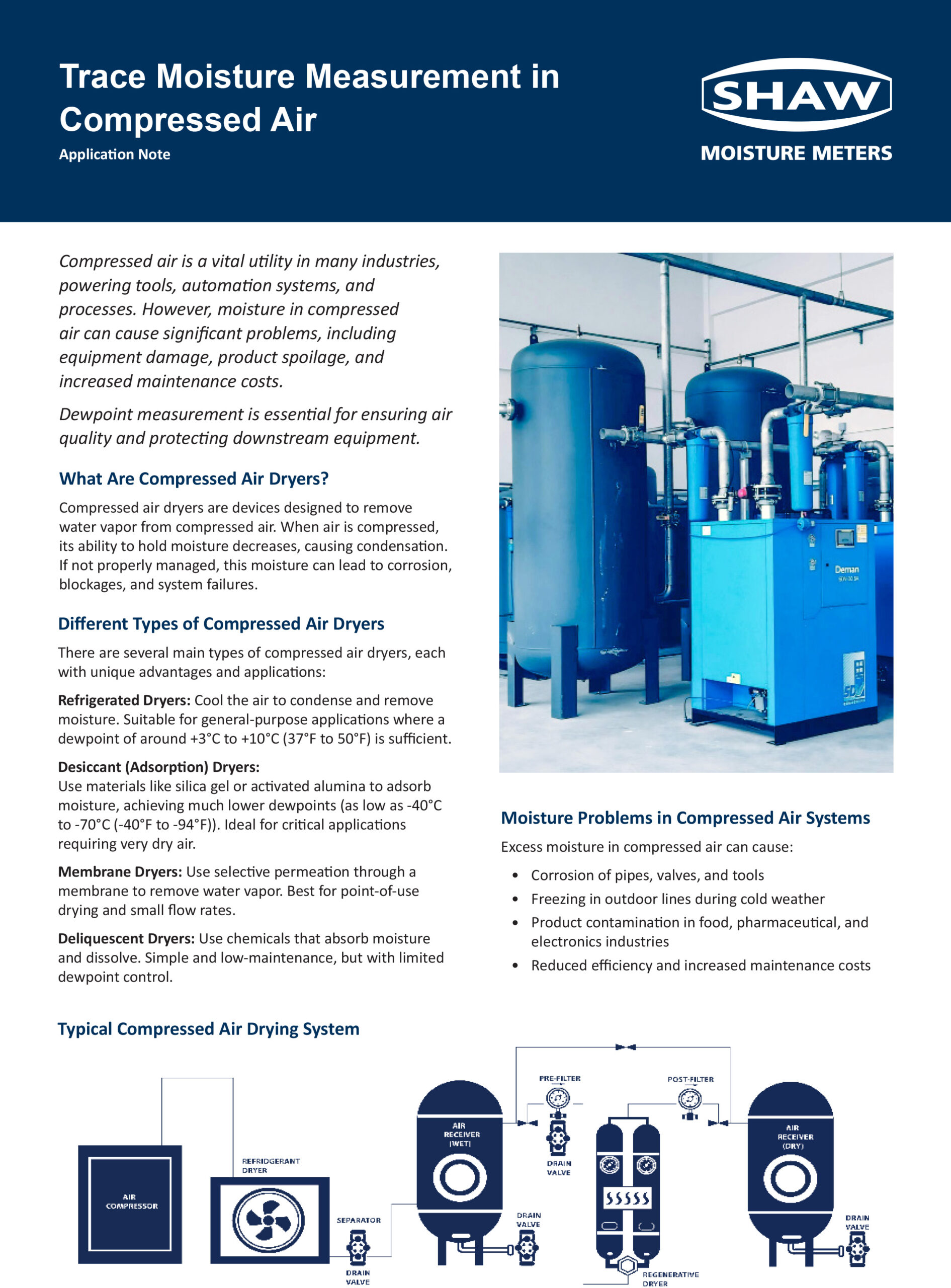
Recommended Products
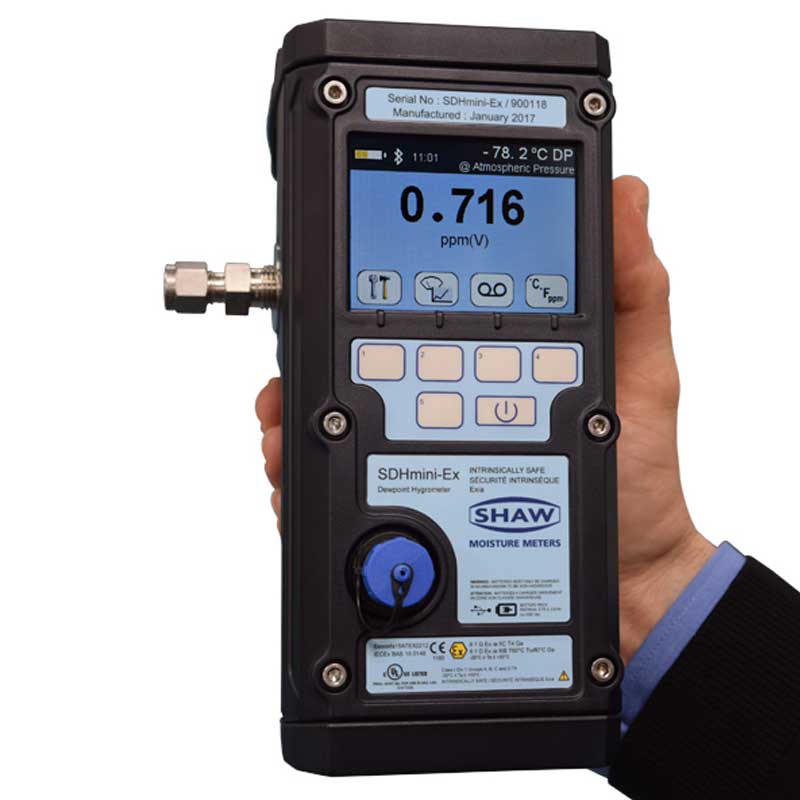
Hand Held Hygrometers
Incorporating AutoCal, desiccant dry-down assembly and advanced features.
More Information
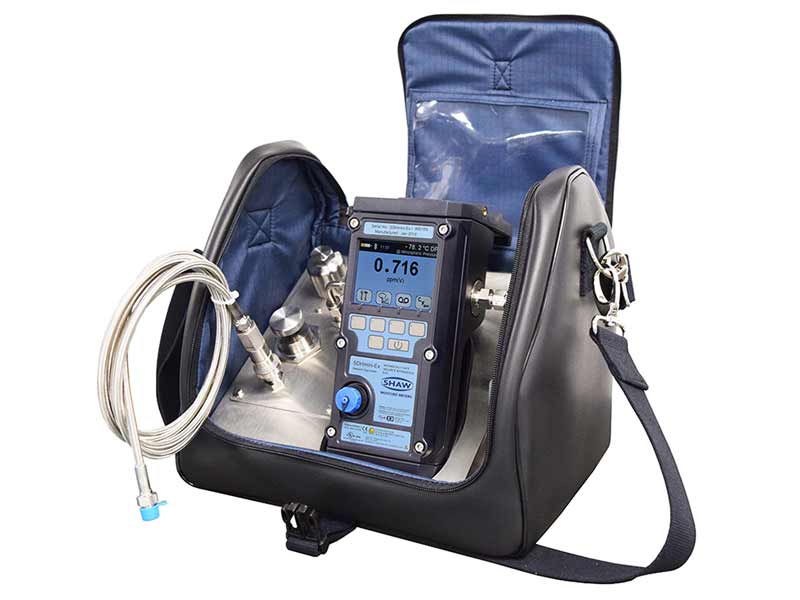
Portable Sample System
Built from high quality components for long term performance and reliability.
More Information
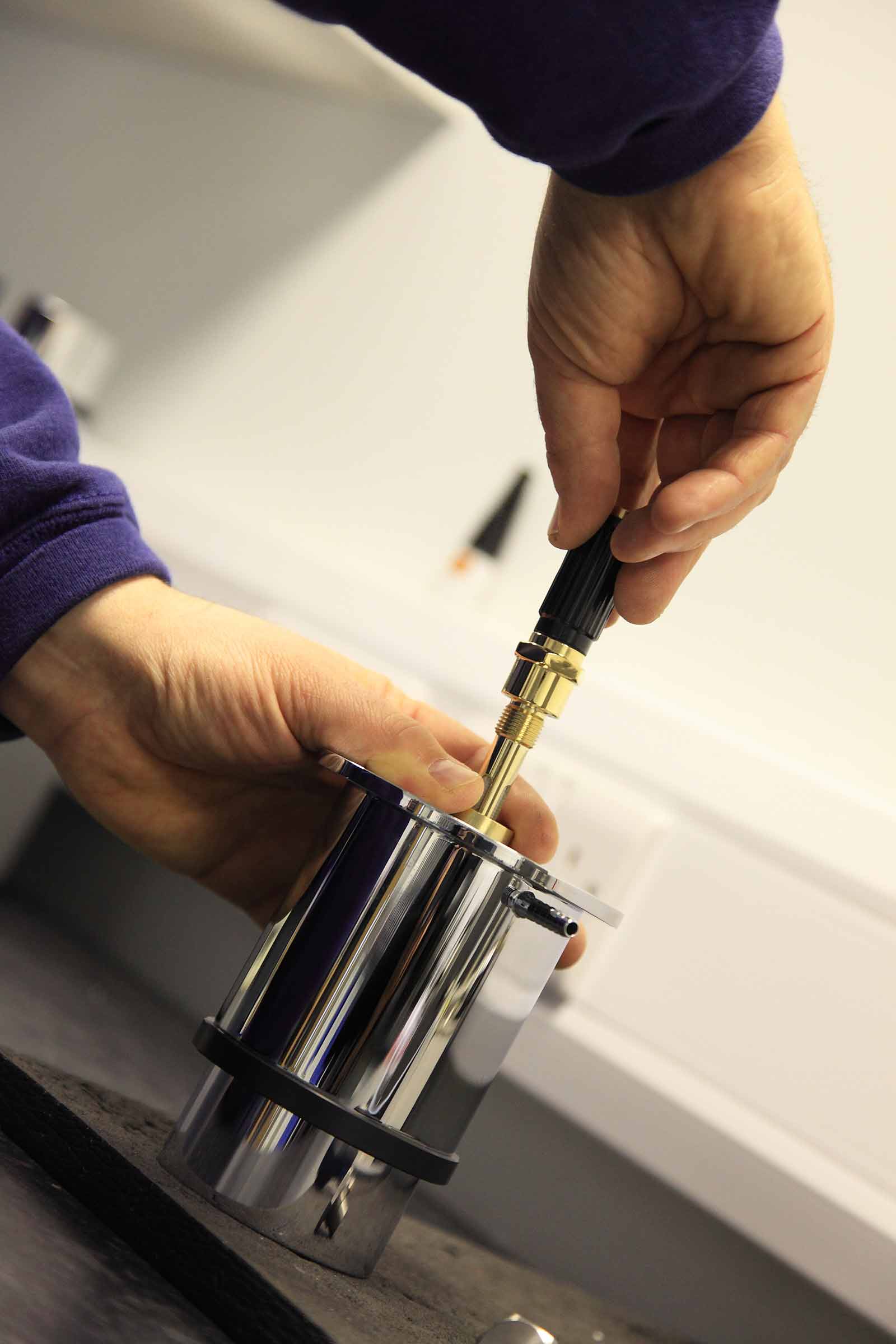
Dewpoint Sensor
Provides accurate and reliable moisture analysis from trace levels to ambient air conditions.
Dewpoint Sensor

Bluetooth Printer
Slim, lightweight, long lasting battery life, fast and low temp printing (for Ex and L models)
More Information
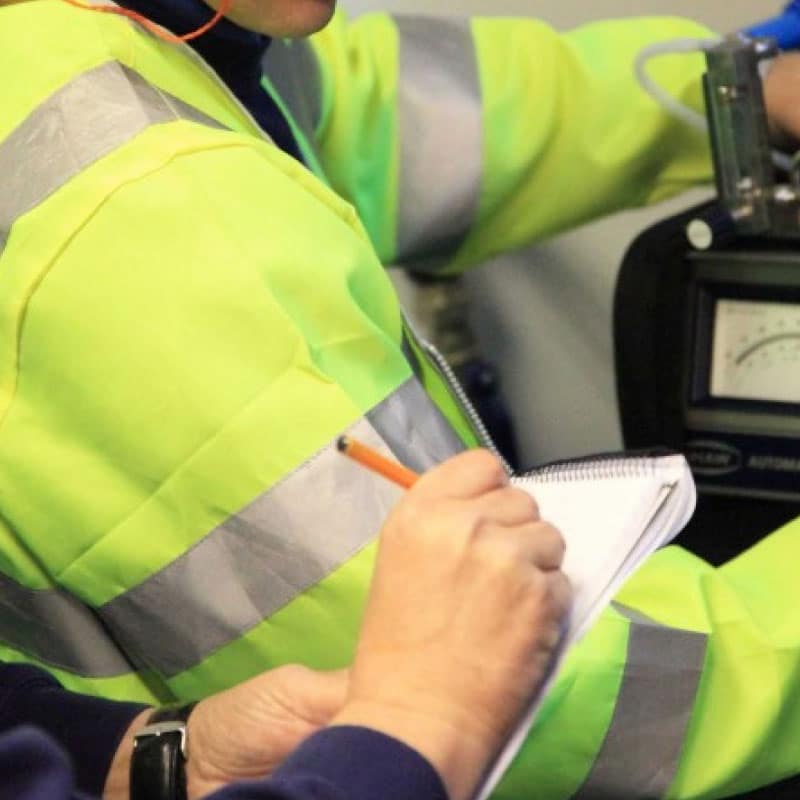
Service & Calibration
Have your dewpoint meter serviced and calibrated by the manufacturer.
Service & Calibration