
Trace moisture analysers with Modbus digital communications protocol
Modbus is a digital communication protocol used to enable communication between multiple electronic devices and a central controller, such as a programmable logic controller (PLC). It facilitates the transmission of signals and data from instrumentation and other devices (servers) to a main controller or data acquisition system (client), as well as the transmission of client control commands in the opposite direction. For example, in a system designed to measure temperature and humidity and relay this information to a computer, the temperature and humidity sensors would act as Modbus servers and the computer would function as the Modbus client.
A typical Modbus network consists of one client and up to 247 servers (electronic devices). Each server is assigned a unique address within the range of 1 to 247, allowing the client to communicate with each server individually. This structure makes Modbus a flexible and widely used protocol in industrial automation and control systems.
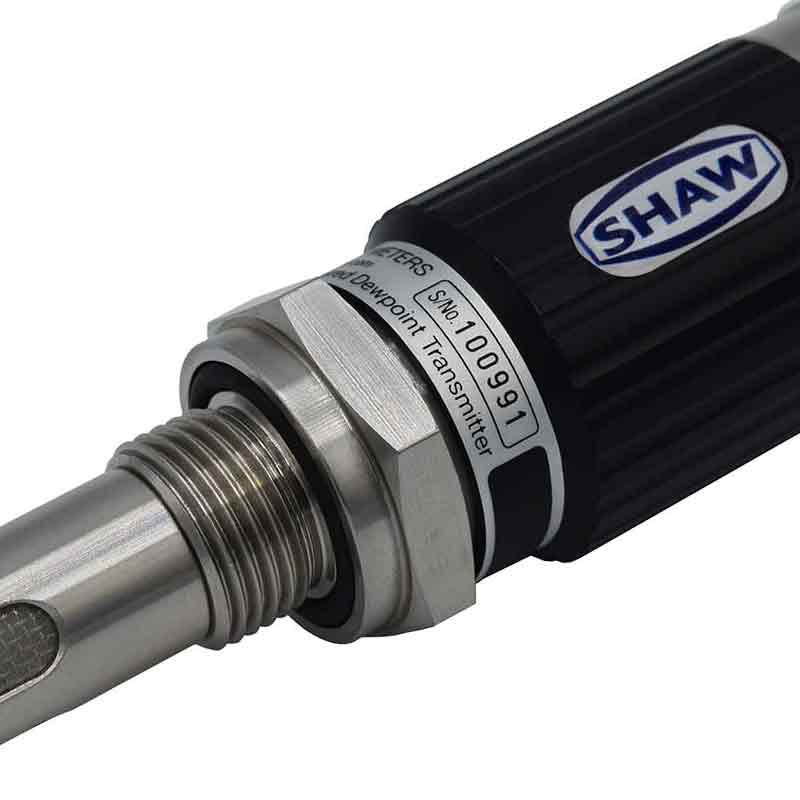
AcuDew Modbus RTU Dewpoint Transmitter Now Available
Experience enhanced connectivity and data reliability and choose our trace moisture analysers with Modbus capability. The AcuDew dewpoint transmitter now features Modbus RTU Serial Line RS485 digital communication. This function ensures you achieve accurate and dependable data transfer, even in environments with significant electrical noise. Additionally, the AcuDew Modbus RTU lets you store a unique TAG ID for straightforward device identification, making it easy to integrate each transmitter into your process site. As a result, you gain improved diagnostics and clearer fault condition reporting for more efficient maintenance and monitoring.
To suit your requirements, we will factory configure the output units to your choice of the following: °C or °F dewpoint, ppm(V), ppb(v), g/m³ or lb/MMSCF, so your AcuDew Modbus RTU transmits precise measurement data directly to your SCADA or PLC system. In addition, access valuable service information, including calibration date, sensor range and software version, so you can manage your process and plan preventive maintenance more effectively. For larger installations, daisy-chain multiple AcuDew dewpoint transmitters on a single EIA485 Standard Bus cable to streamline wiring and simplify installation.
Furthermore, the AcuDew Modbus RTU dewpoint transmitter works seamlessly with Modbus networks, so you can achieve better integration with digital systems, boost operational efficiency and centralise your data management.
We supply each AcuDew dewpoint transmitter ready for immediate use, complete with a Certificate of Calibration traceable to National and International Humidity Standards, an instruction manual and two metres of cable.

AcuDew Modbus RTU Set Up Guide- Part 1
AcuDew Modbus RTU Set Up Guide- Part 2
The Benefits of Modbus
Modbus is an open protocol, which means manufacturers can integrate it into their equipment without paying royalties. This openness has contributed to Modbus becoming a standard communication protocol and one of the most widely used methods for connecting industrial electronic devices. Existing Modbus networks easily integrate new equipment, enhancing their flexibility and appeal in industrial settings.
A key advantage of Modbus over other communication systems is that, in addition to requesting information from devices, it can also issue commands to individual servers. This bidirectional capability allows for both monitoring and control, making Modbus a powerful tool for managing industrial networks.
Modbus Versions
There are several versions of the Modbus protocol, each suited to different communication needs and physical media. The most widely used version includes: Modbus RTU, the most popular version, which uses binary encoding for messages. It operates over serial communication lines such as RS232, RS422 and RS485. This version of Modbus offers efficient and compact data transmission, making it suitable for industrial and automation applications.
Modbus ASCII, like RTU, operates over serial communication lines and uses ASCII characters to encode messages, making debugging and monitoring easier. Modbus TCP operates over Ethernet networks. These variations ensure that Modbus can be implemented across a range of industrial applications.
If you have any questions regarding Modbus or our dewpoint meters, dewpoint hygrometers, trace moisture analysers or trace moisture measurement, please do not hesitate to contact us.